Building intergenerational spaces for global child participation
Children as Actors for Transforming Society (C.A.T.S.) was an international intergenerational forum dedicated to advancing children’s rights and meaningful participation worldwide.
Launched in 2012 by Initiatives of Change (France), in partnership with Initiatives of Change Switzerland and Child to Child, the initiative later welcomed the Learning for Well-being Foundation as an official partner in 2013, followed by M.E.O.W. (a child and youth-led group) and Eurochild.
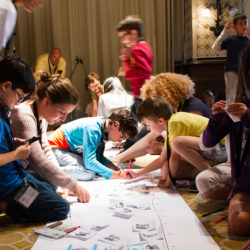
Hosted annually in Caux, Switzerland, C.A.T.S. became a recognised space where children and adults gathered not merely to discuss participation, but to practise it together.
Although the right of children to be heard is enshrined in the UN Convention on the Rights of the Child, implementation often falls short. Across contexts, participation is frequently consultative rather than collaborative.
Common barriers include:
C.A.T.S. emerged to address this gap by creating structured, intergenerational environments where children and adults could experience partnership as a lived reality.
C.A.T.S. was not a conventional conference. It was designed as a participatory ecosystem.
Over six editions (2012–2019), more than 1,600 children and adults co-created workshops, dialogues, and collective actions grounded in equality and mutual respect.
The Forum functioned as:
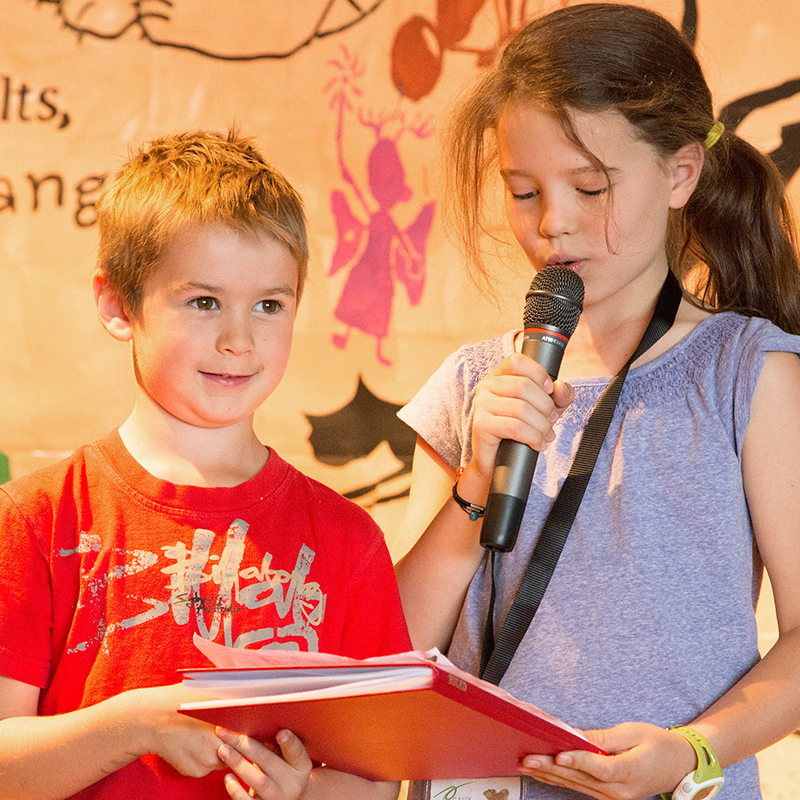
Participation was embedded in the design, facilitation, and governance of the event itself. Children were not attendees – they were co-architects.
The impact of C.A.T.S. extended beyond its annual gatherings.
The Forum inspired:
C.A.T.S. strengthened child-led leadership and encouraged institutional actors to rethink participation structures within their own contexts. The process also generated important learning about transparency, power-sharing, and the complexity of sustaining shared ownership across diverse partners.
The C.A.T.S. partnership concluded in 2019. However, its influence continues through the networks, methodologies, and partnerships it helped establish.
As an early example of large-scale intergenerational collaboration, C.A.T.S. contributed to shifting participation from aspiration to practice. It demonstrated that transformational spaces can be intentionally designed – and that when children are recognised as actors rather than beneficiaries, systemic change becomes possible.
C.A.T.S. remains a landmark initiative in the evolution of global child participation efforts and a formative chapter in the Learning for Well-being Foundation’s commitment to intergenerational partnership.