A national partnership for systemic transformation in education and well-being
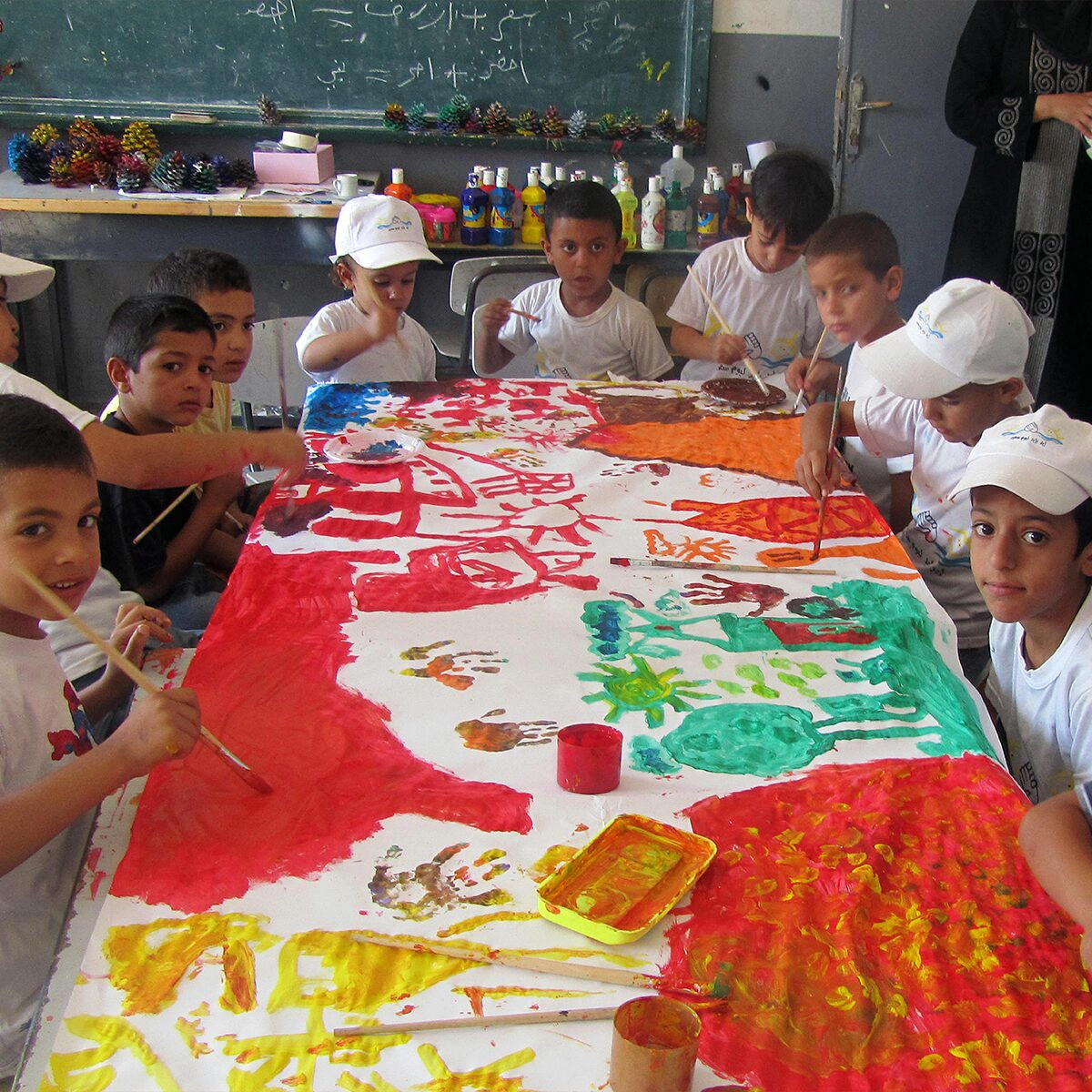
Elham Palestine was the first country-level pilot developed by the Learning for Well-being Foundation in collaboration with national partners. Launched in 2008, the initiative sought to inspire and scale locally rooted innovation across the Palestinian education system.
Over a decade, it evolved into a multi-sector platform that united ministries, schools, civil society organisations, health institutions, and children around a shared commitment to holistic development and well-being.
The word Elham, meaning inspire in Arabic, reflected the programme’s central premise: systemic change becomes possible when local actors are recognised, connected, and supported to strengthen learning environments together.
At the time of its launch, Palestinian educational institutions faced significant structural constraints:
As a result, many educators and community actors piloted promising solutions that remained isolated and under-recognised.
To address these challenges, Elham centred its work on strengthening collaboration between local innovators and public institutions, demonstrating that sustainable change requires both bottom-up initiative and top-down alignment.
Grounded in Learning for Well-being principles, the programme integrated:
Key partners included:
Through national forums, recognition processes, and collaborative networks, Elham positioned inspiring local practice as a driver of policy-level transformation.
Over time, Elham evolved into a national platform for shared learning. Between 2008 and 2018, Elham Palestine functioned as a national learning platform.
Its contributions included:
The initiative received international recognition, including:
More importantly, Elham showed that systems change can grow from recognising and connecting local innovation.
As a result, Elham influenced both policy discussions and local practice. After ten years of implementation, the programme entered a transitional phase in 2018–2020 as the Learning for Well-being Foundation refined its focus on cultivating core capacities and intergenerational partnerships.
New working groups explored:
Although Elham Palestine no longer operates as a standalone programme, it remains foundational within the L4WB ecosystem.
Its legacy continues through strengthened partnerships, shared learning, and a clear demonstration that inclusive, cross-sector collaboration can reshape systems when children, communities, and institutions act together.