Although children’s rights are increasingly recognised, their meaningful participation in shaping decisions that affect them remains limited. Participation is often consultative or symbolic, rather than relational and shared. Adults may struggle to know how to share power and responsibility, while children and young people often lack opportunities to develop agency, voice, and collaboration skills in real-world contexts.
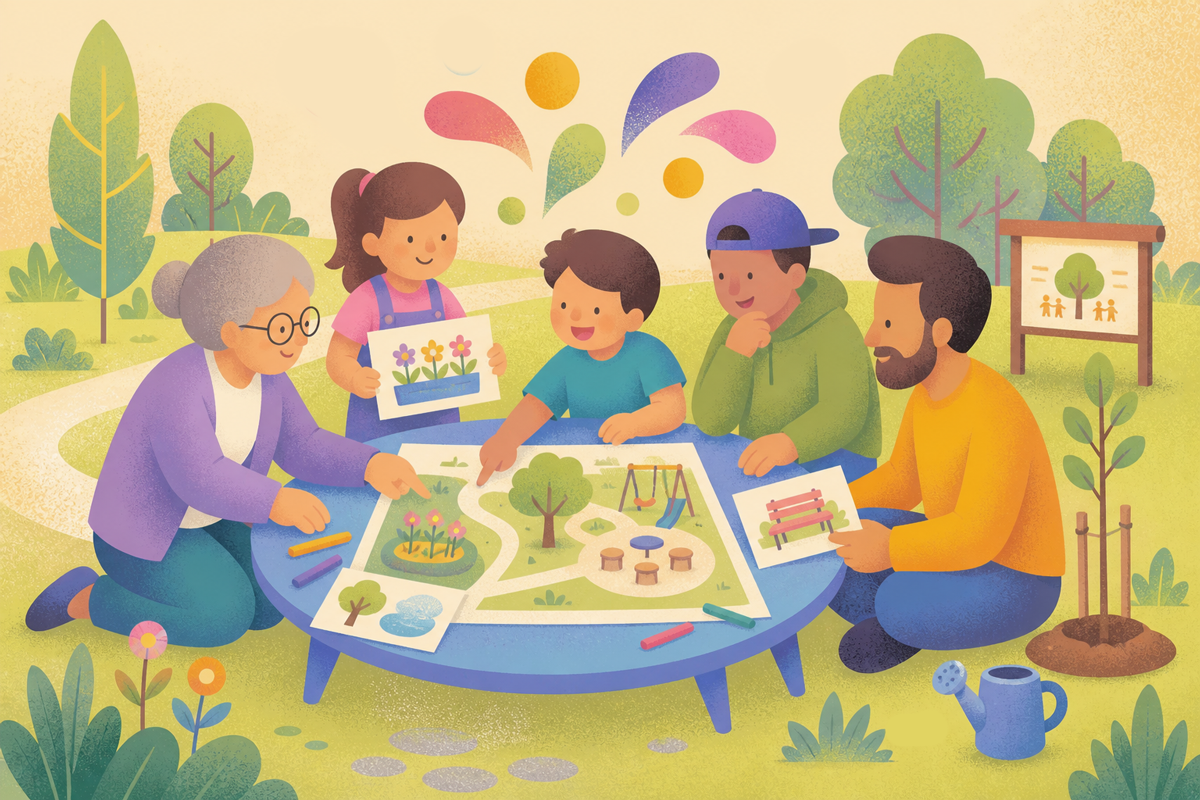
Act2gether addresses this gap by bringing children and adults together as partners in social action. Through the deliberate practice of core capacities such as listening across differences, discerning power dynamics, reflecting on roles, and inquiring into shared concerns the programme creates the conditions for ethical, meaningful, and sustainable intergenerational collaboration.
The programme focuses on intergenerational collaboration in schools, organisations, and community settings. It combines personal development with collective action, supporting participants to build the relational, communicative, and reflective foundations needed for shared decision-making and community impact.
Understanding inner diversity across generations
Participants explore how children and adults differ in how they perceive, interpret, and engage with the world. By practicing observation and perspective-taking, these differences become visible and valued as complementary resources for collaboration.
Developing core capacities for participation
Children and adults strengthen capacities such as listening, observing, inquiring, empathising, and reflecting. These practices support trust, dialogue, and shared understanding across age, role, and power differences.
Intergenerational partnership and allyship
Participants explore shared decision-making, negotiated roles, and allyship. Adults practice creating age-inclusive spaces and regulating their use of power, while children build confidence in expressing needs, ideas, and perspectives.
From dialogue to collective action
Groups apply their learning by co-designing and implementing social action initiatives that respond to real community needs. Emphasis is placed on collaboration, responsibility, and learning through action.
Reflection, ethics, and sustainability
Participants reflect on how participation is experienced, how power is exercised, and what supports long-term collaboration. The programme supports continuous learning and adaptation to sustain intergenerational partnership over time.
Participants will learn to: