Many students disengage from learning not because they lack ability, but because school does not reflect how they naturally learn, relate, or express understanding. When young people repeatedly experience this mismatch without the language to make sense of it, they may internalise frustration, disengage, or doubt their own competence.
Passion & Talent supports educators and youth professionals to help students understand how learning works for them, what energises and motivates them, and how they can participate more actively in learning and collaboration. Drawing on research in self-determination, metacognition, and strengths-based development, the programme equips practitioners with approaches that foster student agency, confidence, and a clearer sense of direction in learning.
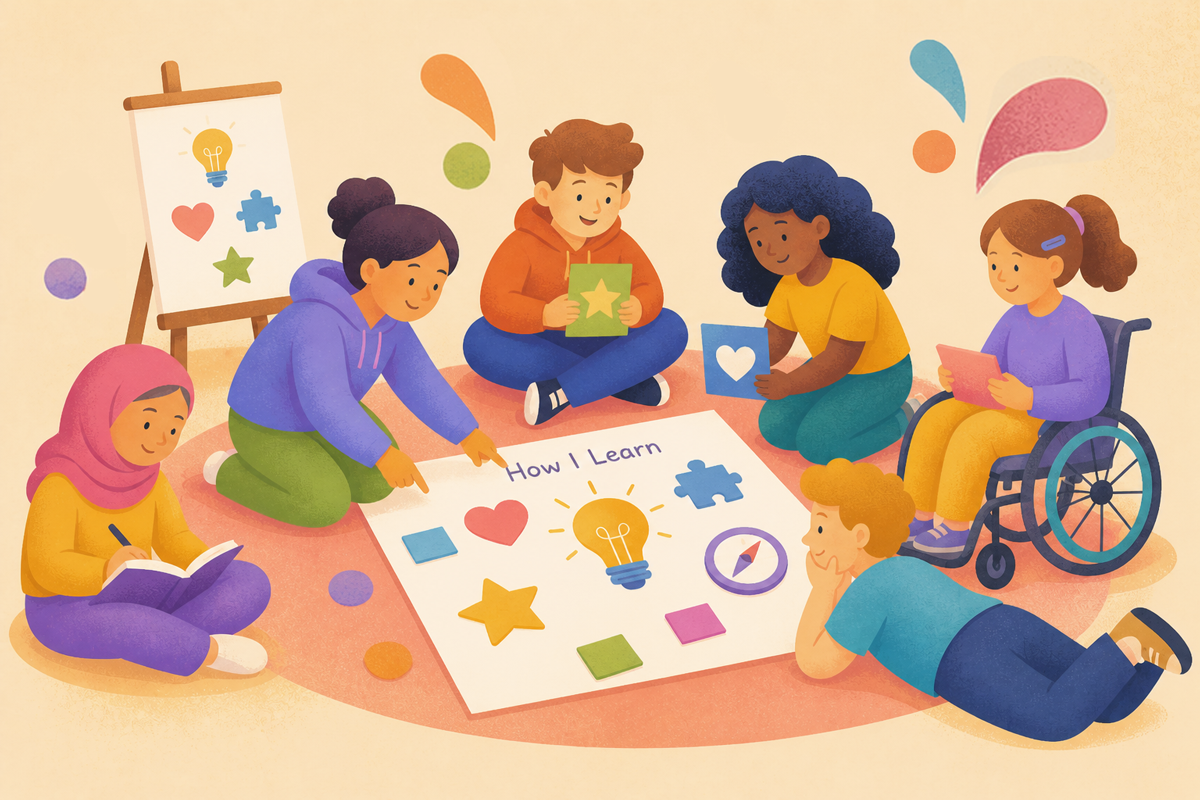
The programme focuses on learning awareness, engagement, and collaboration from a practitioner perspective. Educators are supported to guide students in recognising learning strengths, reflecting on experience, and experimenting with strategies that improve both individual learning and group work. Emphasis is placed on building a shared language for learning that students can use with peers, teachers, and caregivers.
Understanding how I learn
Participants learn how to support students in exploring attention, information processing, and engagement over time. The focus is on helping young people recognise learning signals—such as curiosity, confusion, boredom, or frustration—and use them as information rather than signs of failure.
Learning patterns, strengths, and challenges
Educators explore ways to help students identify preferences, strengths, and recurring challenges in learning, and to notice how these patterns show up across subjects and situations. This supports a more coherent and compassionate learner identity.
Learning diversity and collaboration
Participants develop strategies to make learning diversity visible and constructive in group work. By normalising different ways of thinking, feeling, and working, the programme reduces unhelpful comparison, supports empathy, and strengthens shared responsibility for learning.
Agency, voice, and self-advocacy
The course supports educators in guiding students to express what helps them learn, what challenges them, and what kind of support they need. This strengthens confidence, participation, and constructive dialogue with teachers and peers.
Purpose, motivation, and direction
Participants explore how to help students connect learning to personal interests, values, and aspirations. This supports intrinsic motivation and persistence, particularly when learning becomes demanding or uncertain.
Participants will be better able to support students to: