A national picture of children’s participation
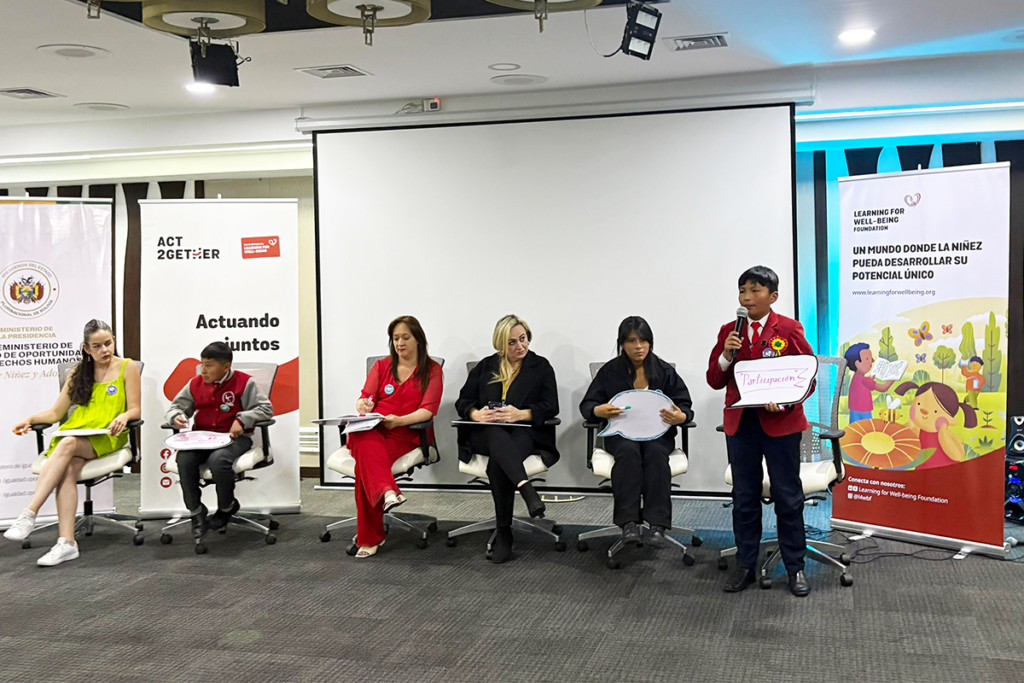
In Bolivia, Children’s and Adolescents’ Committees are recognised within the country’s legal framework as mechanisms through which young people represent their peers and engage with public authorities. They operate at municipal, departmental national indigenous autonomous levels.
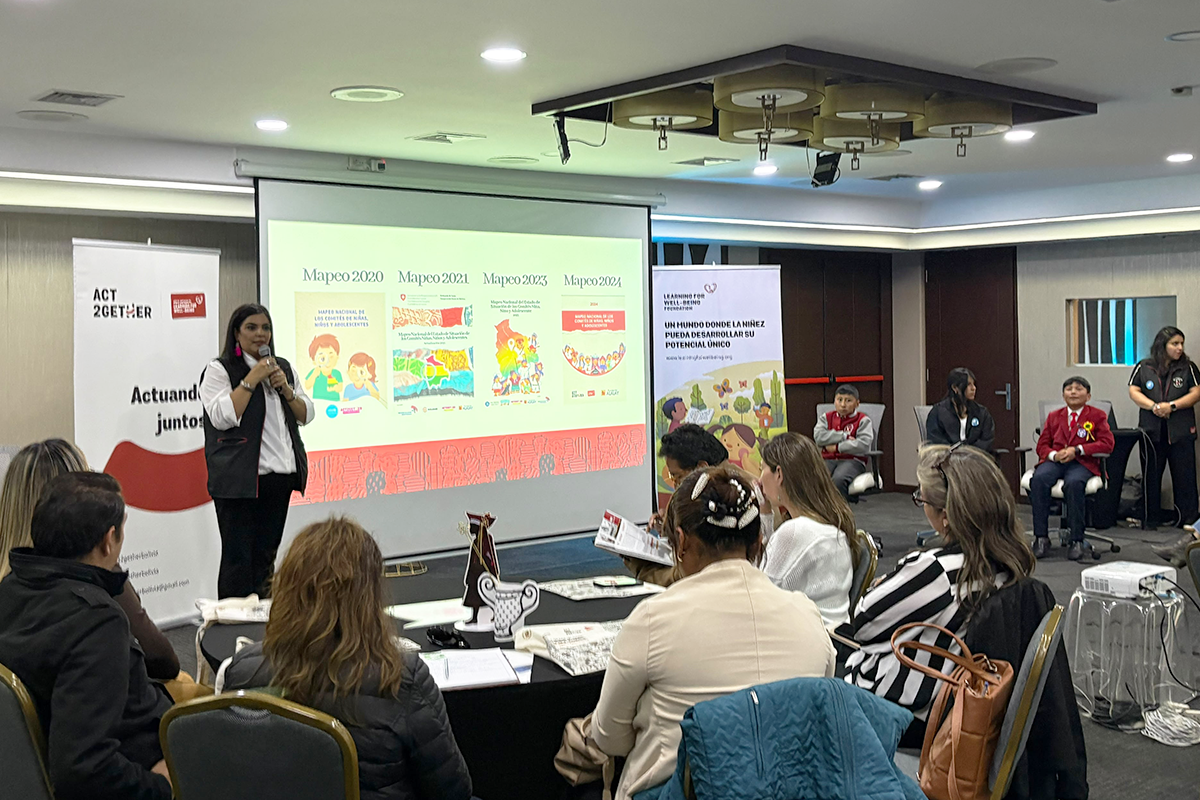
Act2gether Bolivia has worked alongside children’s committees, the public institutions responsible for supporting them and civil society partners since 2019. Since 2020, it has also undertaken national mapping exercises to document how these participation structures function and what support they need.
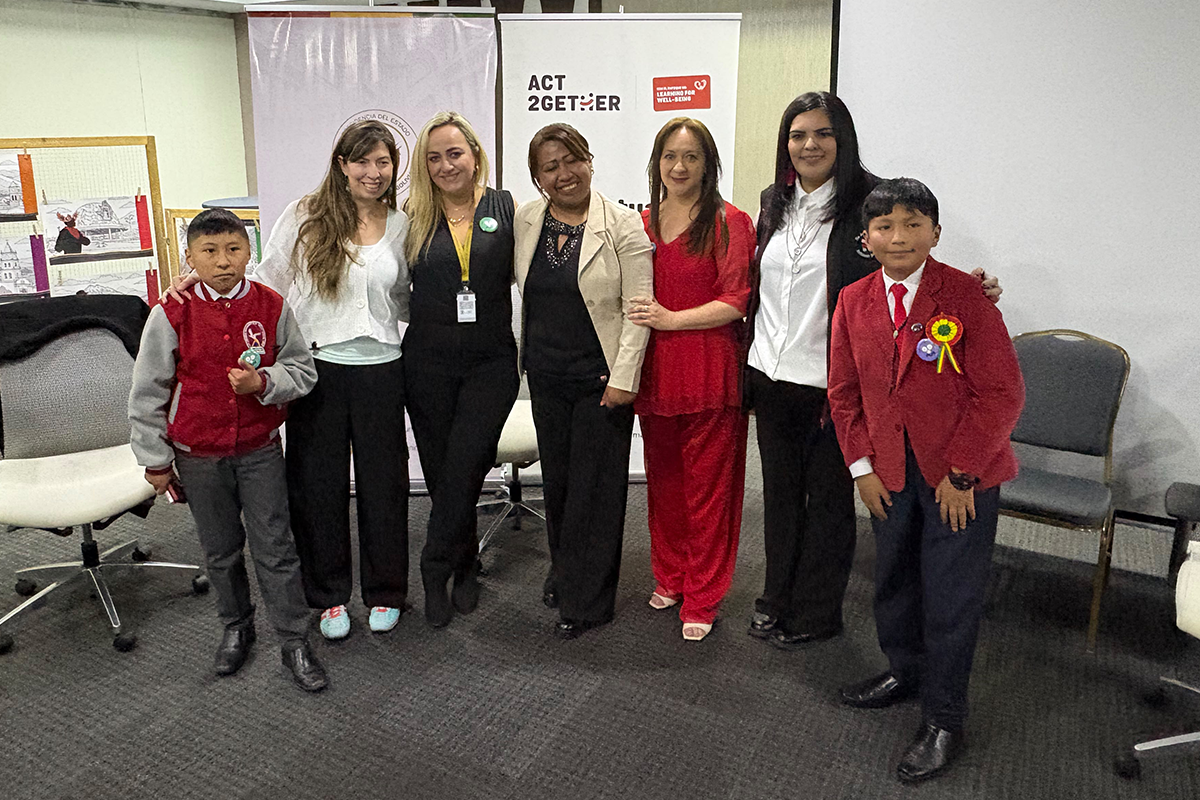
On 16 October, Act2gether Bolivia presented the fifth edition of the National Mapping on the Situation of Children’s and Adolescents’ Committees, in collaboration with Bolivia’s Vice-Ministry for Equal Opportunities and Human Rights, with support from the Learning for Well-being Foundation. Produced during a period of changes in public authorities, the 2026 mapping provides an updated picture of the participation system and the challenges affecting its continuity.
Covering all 335 municipalities and the other levels of representation, the mapping identified 211 committees involving 2,210 children and adolescents, of whom 1,707 were reported as actively participating.
From representation to influence
The mapping documents the reach of these participation structures, as well as achievements and gaps in how they function.
All nine departmental committees were established, while at municipal level, 199 of Bolivia’s 335 municipalities (59%) had functioning committees. Yet fewer than a third of committees had basic organisational tools, such as internal rules and work plans, and their involvement in public planning remained limited.
The research also identified challenges related to insufficient resources, staff turnover, geographical distances and limited connectivity, all of which can affect the continuity of their work.
“Knowing how many committees exist is only the starting point. The mapping helps us understand what supports or limits their work. Our experience shows that formal recognition alone is not enough: children’s participation needs resources, technical support and sustained dialogue with authorities. Regular monitoring helps keep those needs visible when authorities and technical teams change.”
– Tatiana Quiroga, Director of Act2gether Bolivia
In response to these findings, the mapping recommends including children’s committees in annual public planning, creating more opportunities for intergenerational dialogue with authorities, strengthening technical and financial support, and establishing arrangements to maintain continuity when institutional staff change.
These recommendations underline the importance of moving beyond formal recognition towards public processes that can take children’s contributions into account.
What Bolivia’s experience can teach us
For Learning for Well-being, participation is both a right and an opportunity for children to develop their capacities, build relationships, and contribute to their communities, all of which support holistic well-being. It also allows adults and institutions to learn from children’s experiences and perspectives.
This focus on intergenerational partnerships is reflected in Act2gether Bolivia’s work with children, public authorities and civil society partners to strengthen the relationships and conditions that enable meaningful participation. The national mapping complements this work by providing evidence on how participation structures function and where institutional support needs to be strengthened.
For governments and organisations working in other contexts, Bolivia’s experience illustrates the value of examining not only whether participation structures exist, but also how they operate and whether they enable children to contribute to public decisions.
In Bolivia, the findings can inform continued collaboration between children, authorities and partners. Future monitoring can help assess whether efforts to strengthen these structures are leading to more sustained participation and greater opportunities for children to influence decisions affecting their lives.
Learn more about Act2gether Bolivia