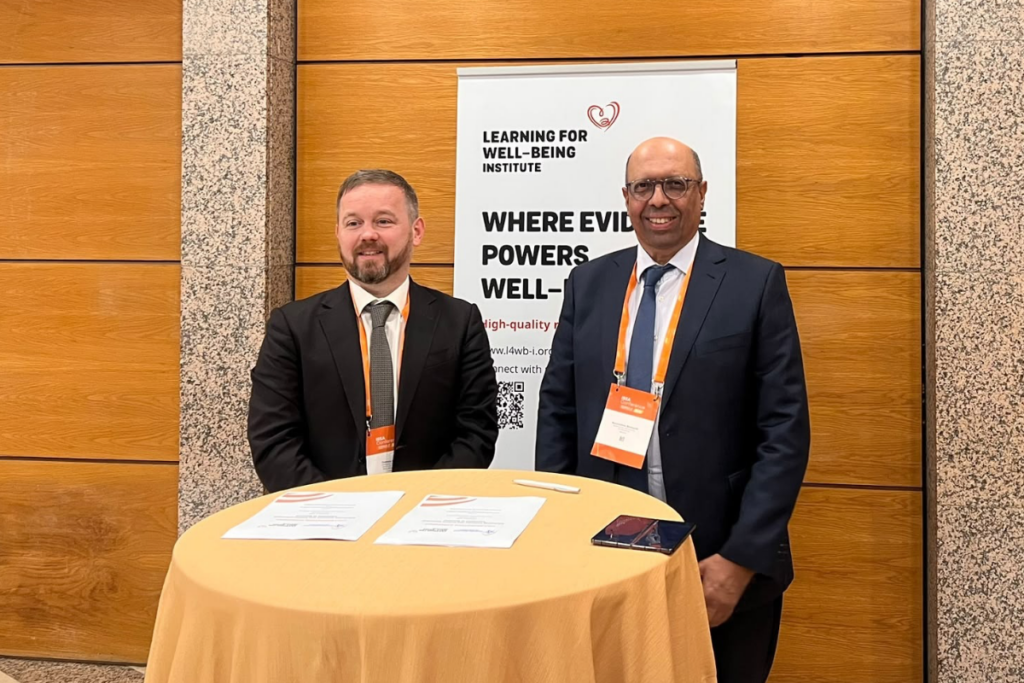
During the ISSA Conference 2026 in Lisbon, the Learning for Well-being Foundation (L4WB-F) and the Fondation Marocaine du Préscolaire (FMPS) signed a three-year collaboration agreement to strengthen the quality, inclusiveness and holistic orientation of preschool education in Morocco.
The agreement was signed by Dominic Richardson, Managing Director of L4WB-F, and Noureddine Boutayeb, President of FMPS.
Morocco has made substantial progress in expanding access to preschool education. As access grows, it becomes increasingly important to ensure learning environments respond to children’s different needs and ways of developing. FMPS plays a central role in Morocco’s preschool system, supporting more than 400,000 children through a nationwide network of over 24,000 preschool classes in the 2024–25 school year.
Bringing Inner Diversity into preschool practice
The collaboration offers an important opportunity to advance work on Inner Diversity, which recognises that each person has unique ways of perceiving, processing and making sense of the world.
Through the Learning for Well-being Framework, the partners aim to help educators recognise these differences, nurture children’s core capacities and create learning environments that respond to their individual ways of learning, relating and developing.
Drawing on FMPS’s expertise in educator development and knowledge of the Moroccan preschool system, the partners plan to adapt the framework to the local context and co-develop pedagogical resources and classroom activities. The proposed work also includes training for trainers and preschool educators, alongside ongoing professional support to help translate these approaches into everyday teaching practices.
Connecting practice, research and evidence
Research and evaluation are another important component of the proposed collaboration. The Learning for Well-being Institute is expected to contribute its research expertise alongside FMPS’s research team.
Together, they would examine how the approach is implemented, assess changes in educator practices and classroom environments, and identify lessons to inform further programme development. The findings could also support decisions about potential wider application across Morocco’s preschool system.
The agreement establishes a framework for this work, with the partners jointly agreeing on specific activities, implementation arrangements, and funding.