World Children’s Day, marked every year on 20 November, commemorates the adoption of the United Nations Convention on the Rights of the Child. It offers an opportunity to reflect on how children’s rights are realised in everyday life and on the conditions that enable every child to learn, develop and thrive.
This year, the Learning for Well-being Foundation, its country offices and the Learning for Well-being Institute marked the occasion through children’s own perspectives, educational initiatives and research informing global discussions on early childhood policy and investment.
Explore some of this year’s highlights.
Children’s rights in their own words
“We want schools and communities where we can learn, play and be ourselves.”
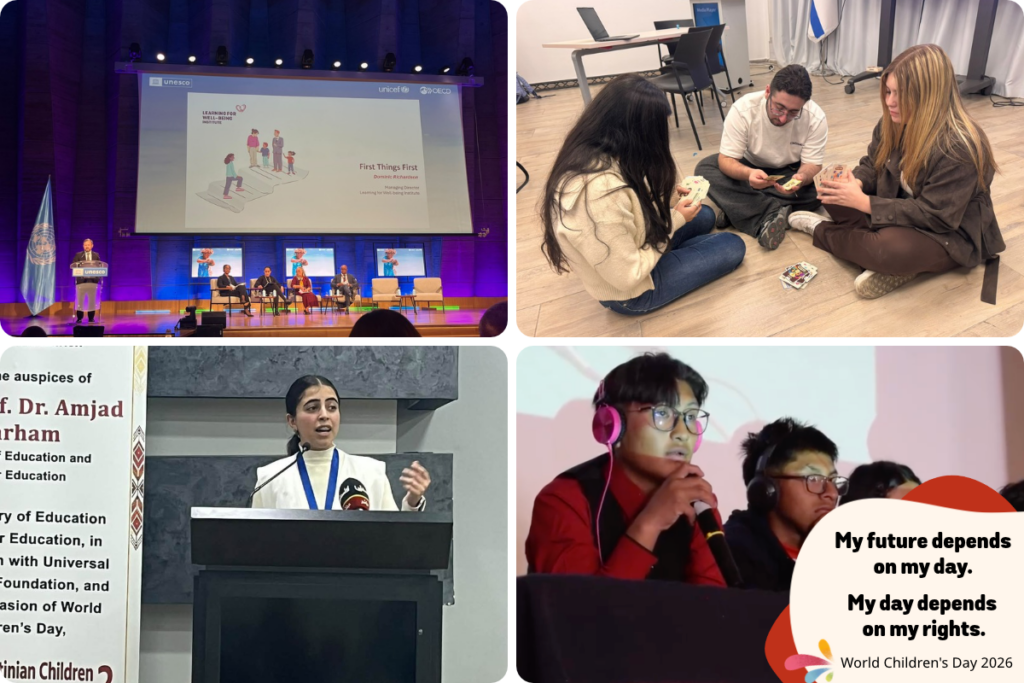
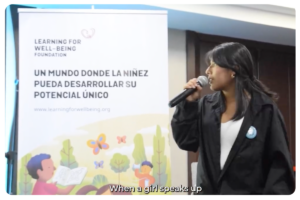
In a video produced by Act2gether Bolivia, children and adolescents share what their rights mean to them. Their messages touch on the freedom to think, feel, express themselves and learn in different ways, the importance of having their emotions respected, and the opportunity to discover their own talents and capacities.
“We have the right to feel, think and express ourselves differently.”
They also speak about their role in shaping their schools and communities, calling on adults not only to listen to their ideas but to take them into account.
The right to education, safety and dignity
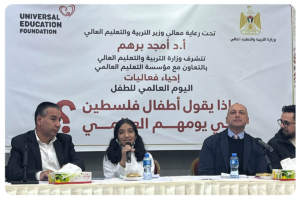
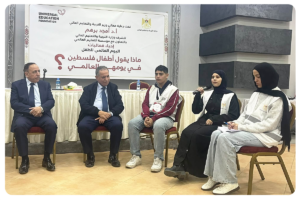
The experiences of students in Gaza and the right to education were among the issues addressed at What Do Palestinian Children Say on Their International Day?, a conference organised by the Universal Education Foundation in partnership with the Palestinian Ministry of Education.
Members of school parliaments and UEF’s Children’s Advisory Group helped shape the conference programme through artwork, videos and dialogue with decision-makers and representatives of national and international organisations.
The conference concluded with a call for urgent action from United Nations bodies and human rights organisations to protect Palestinian children’s rights to life, education, safety and dignity.
Recognising rights in everyday situations
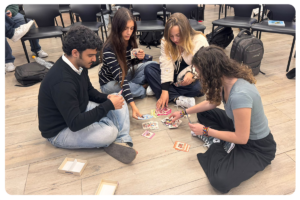
Having a photograph shared without consent or not having enough time to play are among the everyday situations explored in Rights Squared, a card game developed by Education for Life in Israel to help children recognise and understand their rights.
The game complements a collection of educational resources for schools, youth groups and families.
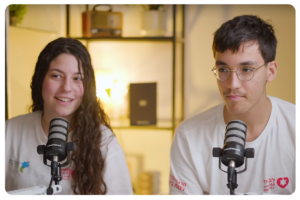
In collaboration with the National Student and Youth Council, Education for Life also developed Are You Listening for a Minute?!, a podcast in Hebrew where young people raise questions and discuss issues that matter to them.
Building systems around how children develop
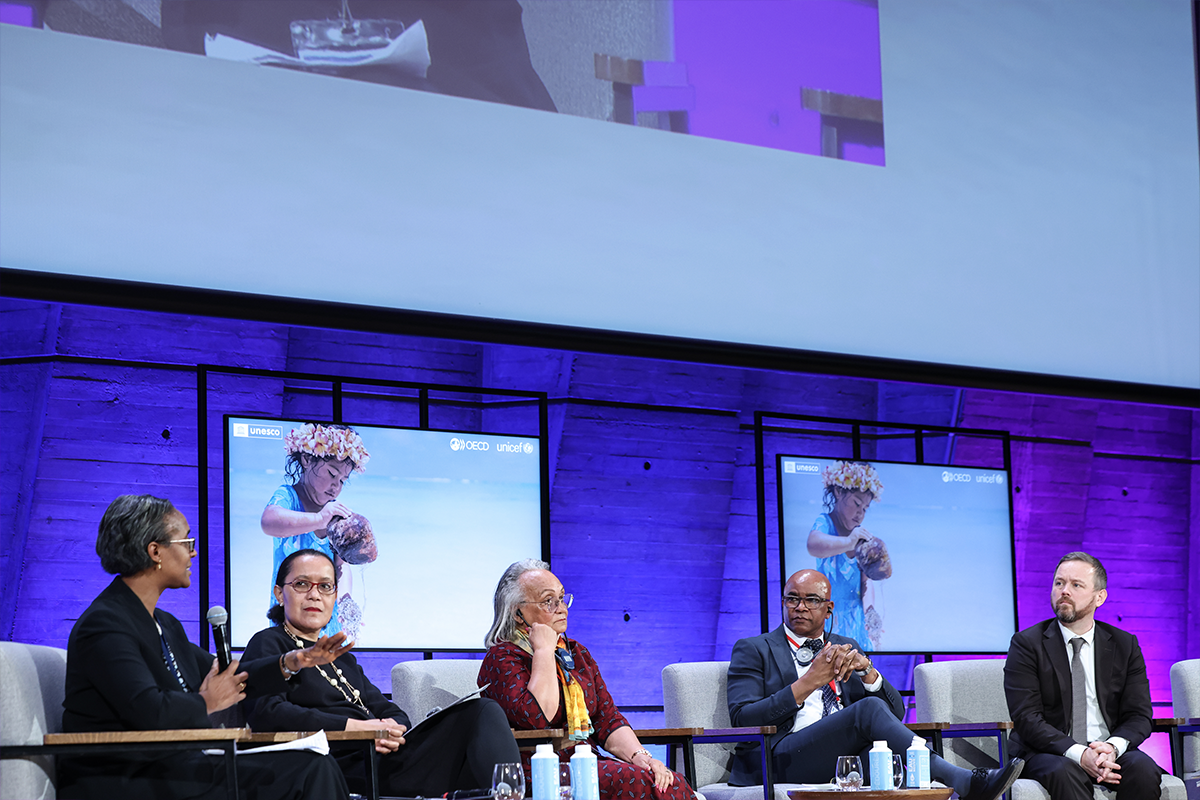
The 2026 Global Report on Early Childhood Care and Education, published jointly by UNESCO, UNICEF and the OECD and launched in Paris on World Children’s Day, draws substantially on new evidence from First Things First, a forthcoming technical report jointly developed by UNESCO and the Learning for Well-being Institute.
The Global Report highlights persistent underinvestment in early childhood, particularly in services for children under the age of three.
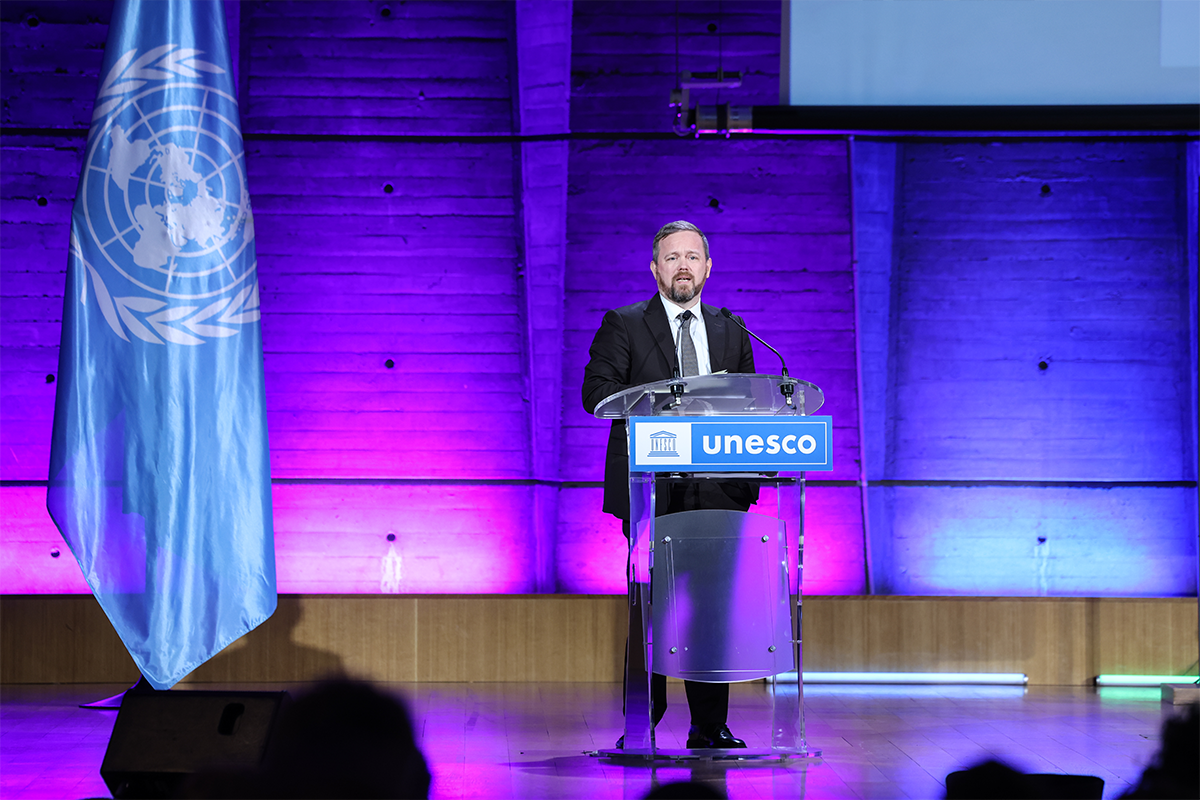
In his keynote at the launch, Dominic Richardson, Managing Director of the Institute, connected early childhood development to a wider vision of peace, shared prosperity and the realisation of human potential, reflecting on how innate human capacities such as listening, enquiring and empathising can be nurtured from the earliest years.
He challenged the way public systems are often built around the school years, rather than around how children develop from birth. This has implications for when governments invest in children and how policies across health, care, education and social protection are designed and coordinated.
Upholding children’s rights is a year-round responsibility, from everyday decisions in schools and communities to the policies and investments that shape children’s futures.